At a glance
- Small changes can make Namibian homes feel warmer without major renovations.
- Layered bedding, rugs, throws, and heavier curtains help retain warmth naturally.
- Sealing draughts around doors and windows is one of the most affordable winter fixes.
- Heating one frequently used room can be more cost-effective than warming the whole home.
- Energy-efficient habits can help reduce winter utility costs while improving comfort.
Winter in Namibia may not bring snow to most regions, but anyone who has experienced an early Namibian morning knows that the cold can still bite, especially in homes that were designed to stay cool during the hotter months.
The challenge for many households is finding ways to stay warm without dramatically increasing electricity costs. Fortunately, creating a cosy and comfortable home during winter does not always require expensive renovations or high-powered heaters. Small, practical changes can make a noticeable difference.
Here are some affordable and effective ways to keep your home warmer this winter while still keeping energy costs under control.
1. Use layers to create warmth naturally
One of the easiest and most cost-effective ways to make a home feel warmer is by adding layers throughout your living spaces.
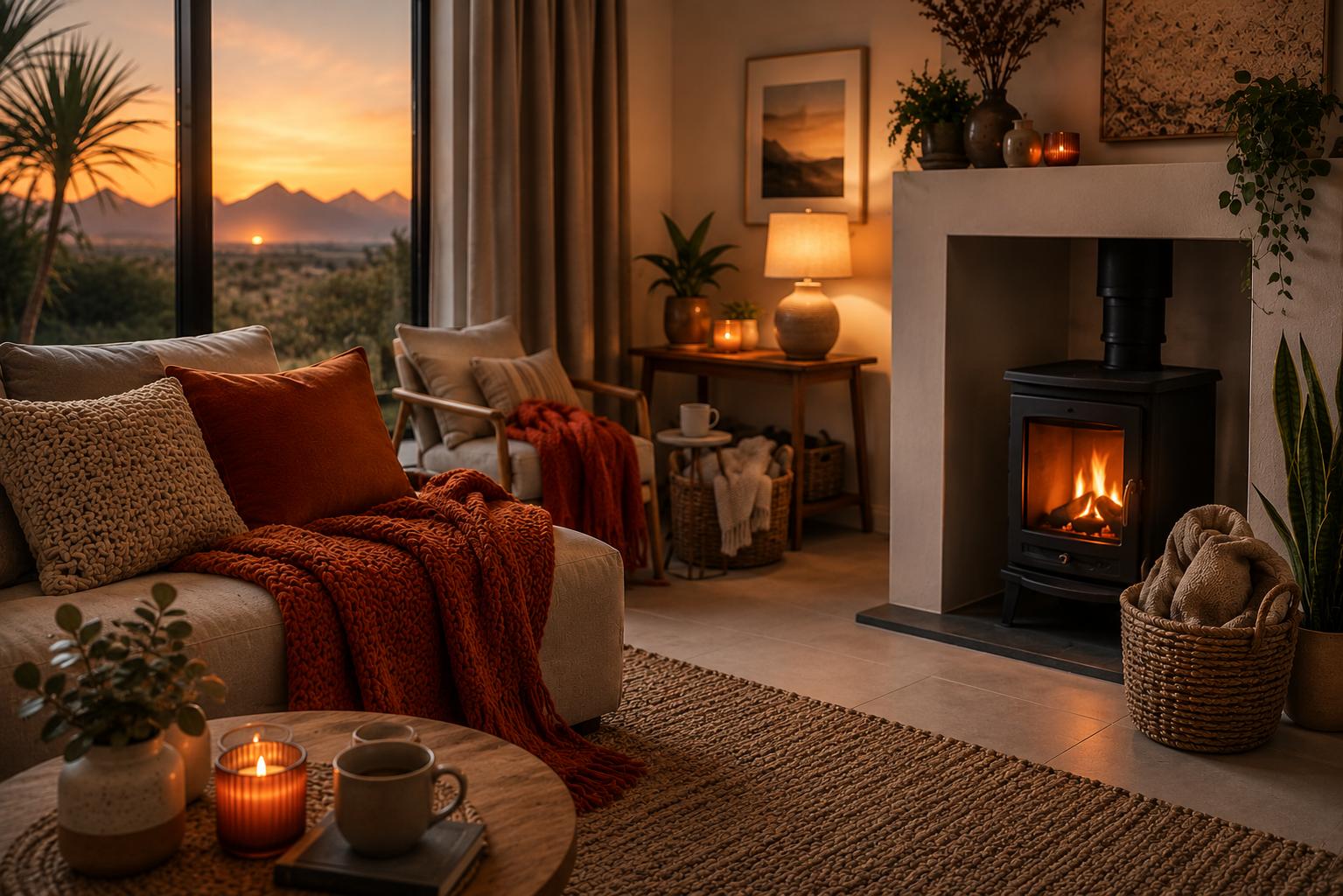
Soft throws, fleece blankets, textured cushions, and thicker rugs can instantly make rooms feel more inviting while also helping to retain heat. Rugs are especially useful on tiled floors, which are common in many Namibian homes and can become icy cold during winter mornings.
Natural textures and warm tones such as burnt orange, earthy browns, olive green, and terracotta can also help create a warmer visual atmosphere during the colder season.
Bedrooms can benefit from thicker bedside rugs and additional blankets layered onto beds instead of relying solely on electric heating.
2. Stop cold air from entering your home
Many homes lose warmth through small gaps around doors and windows. Preventing draughts is one of the cheapest ways to improve comfort during winter.
Simple fixes include:
- Using door draft stoppers
- Adding weather strips around windows and doors
- Closing unused rooms to retain warmth
- Sealing visible gaps where cold air enters
Even rolled-up towels placed at the bottom of doors can help prevent cold air from moving through the house.
This is particularly useful in coastal areas like Swakopmund and Walvis Bay, where cold sea air and fog can make homes feel significantly colder during winter months.
3. Change your curtains for winter
Curtains do more than provide privacy. Thick curtains can help trap heat indoors during winter and reduce heat loss through windows overnight.
Swap lightweight summer fabrics for heavier lined curtains or thicker woven materials during colder months. Keeping curtains open during sunny afternoons also allows natural heat into the home before temperatures drop again in the evening.
Homes that receive strong afternoon sun in areas like Windhoek can especially benefit from using sunlight strategically to warm living areas naturally.
4. Choose heating options carefully
Portable gas heaters remain a popular choice in many Namibian homes because they heat rooms quickly and can still be used during power outages.
However, safety is important:
- Ensure rooms are ventilated properly
- Never leave heaters unattended
- Keep heaters away from curtains and furniture
- Install a carbon monoxide detector if possible
Electric heaters can also be useful for smaller spaces, but energy-efficient options such as oil heaters or infrared heaters may help reduce electricity usage compared to older fan heaters.
Before buying a heater, consider:
- Room size
- Electricity consumption
- Safety features
- Portability
Sometimes heating one frequently used room effectively is more affordable than trying to warm the entire house.
5. Invest in winter bedding
A warm bed can make winter far more comfortable without increasing monthly utility costs.
Flannel sheets, thicker duvets, fleece blankets, and layered bedding help retain body heat naturally. Hot water bottles remain one of the most affordable and energy-efficient ways to warm a bed before sleeping.
Electric blankets can also be effective when used correctly, but many households find that layering bedding properly reduces the need to leave electric heating running throughout the night.
6. Make outdoor spaces winter-friendly
Namibians enjoy outdoor living year-round, and winter does not necessarily mean abandoning patios, braai areas, or gardens.
Adding simple outdoor heating solutions can help extend the use of these spaces during colder evenings:
- Fire pits
- Outdoor gas heaters
- Wind barriers or outdoor blinds
- Warm blankets for seating areas
A sheltered patio with a fire pit can turn winter evenings into a cosy social space for family and friends without requiring expensive upgrades.
7. Focus on energy efficiency this winter
With utility costs continuing to rise, winter is also a good time to make small energy-saving improvements around the home.
Switching to LED lighting, using timers for heaters, insulating geysers, and reducing unnecessary electricity usage can help offset winter energy costs.
Homeowners may also want to check whether their home’s insulation, window coverings, or roofing could be improved over time to make the property more energy-efficient year-round.
Beyond comfort, energy-efficient homes are increasingly attractive to buyers and tenants looking to manage monthly living costs more effectively.
Winter comfort does not need to be expensive
Creating a warm and inviting home during winter is often less about expensive heating systems and more about practical, thoughtful adjustments.
By combining layered textures, simple draught prevention, efficient heating, and better insulation habits, Namibian homeowners and tenants can stay comfortable throughout winter while keeping costs under control.