• Property for Sale
  • Property to Rent
  • Estate Agents
  • Bond Calculator
  • Property News
  • Khomas Area Guide
  • Erongo Area Guide
  • Oshana Area Guide
  • Property in Erongo
  • Property in Khomas
  • Property in Otjozondjupa
  • Houses for Sale
  • Apartments for Sale
  • Vacant Land for Sale
  • Farms for Sale
MyProperty Africa
  • Advertise
  • Changelog
  • Marketplace for Agents

© 2026 Built with 🧡 by Entegral. We simplify real estate (technology) in Africa | Privacy Policy.

MyProperty Africa
Favourites

The cost of keeping a home in Namibia: September 2026 inflation

MyProperty Africa
Back to News

The cost of keeping a home in Namibia: September 2026 inflation

Published 15 October 2026

·

3 min read

Namibia's annual inflation rate rose to 5.4% in September 2026, up from 3.5% a year earlier and the highest reading in the past 12 months. Most of that jump came from fuel and transport, not from housing.
The cost of keeping a home in Namibia: September 2026 inflation

Namibia's annual inflation rate rose to 5.4% in September 2026, up from 3.5% a year earlier and the highest reading in the past 12 months. Most of that jump came from fuel and transport, not from housing.

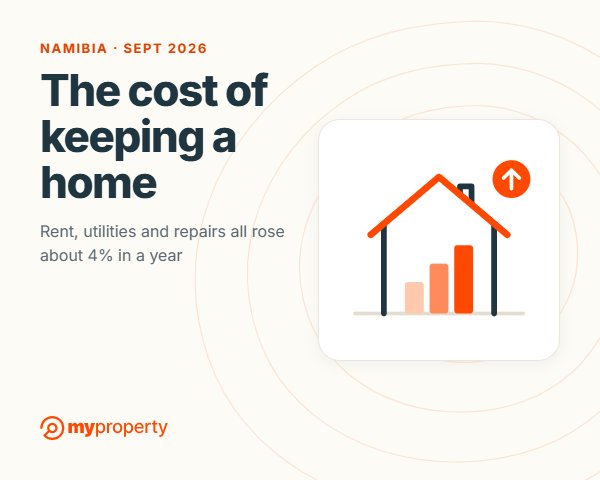
The cost of keeping a home still went up, though. Rent, utilities and repairs all rose by about 4% year on year, and each of them is climbing faster than it was in September 2025. Here is what the latest Namibia Statistics Agency (NSA) figures mean if you rent, own, or are looking to buy.

Rent is rising faster than last year

Rental payments for dwellings rose 4.3% in the year to September 2026, up from 3.7% in September 2025. The NSA's rental measure covers both renters and owners, so it tracks the general cost of occupying a home rather than only lease prices.

For tenants, a lease renewal with an escalation of around 4% to 5% is now in line with the market. For landlords, an escalation below 4.3% means your rental income is falling behind the cost of housing in real terms.

Running a home costs about 4% more

Housing, water, electricity, gas and other fuels make up 28.4% of the average Namibian household's spending, the biggest share of any category. That group rose 4.2% in the year to September 2026 and added 1.0 percentage point to headline inflation.

CostAnnual change, Sep 2025Annual change, Sep 2026
Rental payments for dwelling3.7%4.3%
Housing, water, electricity, gas & other fuels (total)3.6%4.2%
Regular maintenance and repair of dwelling3.1%4.0%
Electricity, gas and other fuels

Never miss a property story

Get our latest news straight in your Google feed.

Add as a preferred source on Google

More in Market

What Namibia built in July 2026: The coast leads and renovations keep climbing

What Namibia built in July 2026: The coast leads and renovations keep climbing

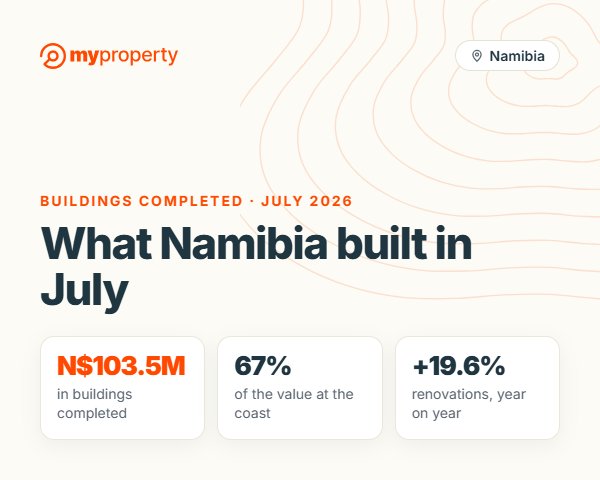
Buildings worth N$103.5 million were completed in Namibia's four biggest reporting towns in July 2026, according to the latest Buildings Completed report from the Namibia Statistics Agency (NSA). The coast did most of the building, home completions held steady against last year, and renovations rose...

Read more →

Ask these questions to find out more about what is happening in your property market

Ask these questions to find out more about what is happening in your property market

Whether you’re buying, selling, or simply curious about your neighbourhood’s property trends, a conversation with a qualified real estate expert can give you clarity you won’t find online. Local agents track micro-market shifts, upcoming developments, and buyer behaviour long before the data becomes...

Read more →
Agents in this area

Browse More News
3.0%
3.8%

Furnishings, household equipment and routine household maintenance also rose 4.0% nationally. For homeowners, that means this year's maintenance budget should be at least 4% bigger than last year's to buy the same work.

Windhoek and the coast are feeling it most

Khomas had the highest regional inflation at 6.2%, nearly double its 3.2% a year ago. The south and coast were close behind at 5.8%, and there housing costs rose sharply.

ZoneRegions (towns where prices are collected)Inflation, Sep 2025Inflation, Sep 2026What stands out for homes
Zone 2Khomas (Windhoek)3.2%6.2%Furnishings, household equipment and routine house maintenance up 8.3% (from 3.5%)
Zone 3//Kharas, Erongo, Hardap, Omaheke (Swakopmund, Keetmanshoop, Mariental, Gobabis)3.4%5.8%Housing, water, electricity, gas and other fuels up 6.6% (from 3.3%)
Zone 1Northern and north-eastern regions (Oshakati, Otjiwarongo, Katima Mulilo)3.8%4.3%Lowest regional rate; transport the main driver

In Windhoek, housing makes up 32.7% of the household basket, more than in any other zone. So even a moderate rise in rent and utilities weighs more heavily on Khomas households. At the coast and in the south, the 6.6% jump in housing and utility costs is well above the national 4.2%.

What it means for you

The biggest price pressure right now is getting around, not the home itself. Transport inflation hit 14.9%, with petrol and diesel up 30.4% in a year. Petrol now averages about N$25.60 a litre and diesel about N$28.40 across the zones.

  • Renters: budget for renewals of around 4% to 5%, and factor your commute into where you look. A slightly higher rent closer to work can now cost less than a cheaper place far away.
  • Landlords: escalations of at least 4.3% keep pace with the market. In Erongo, //Kharas, Hardap and Omaheke, rising utility costs make it worth checking which costs your lease passes on to tenants.
  • Homeowners: plan for maintenance and repairs costing at least 4% more than last year, and closer to 8% for household goods and upkeep in Windhoek.
  • Buyers: look at the full monthly cost of a home, including rates, utilities, upkeep and travel, not just the bond repayment.

The NSA publishes October's figures on 5 November 2026.

Source

  • Namibia Statistics Agency, Namibia Consumer Price Index bulletin, September 2026. All figures are year on year to September 2026 unless stated.
What Homeowners and Potential Buyers Need to Know About a Possible Rate Cut and How to Maintain Financial Health

What Homeowners and Potential Buyers Need to Know About a Possible Rate Cut and How to Maintain Financial Health

With the repo rate currently sitting at 6.75%, homeowners and potential buyers may be wondering if this rate will change soon and how that might affect their finances. While the Bank of Namibia (BoN) has kept the rate unchanged for now, there is speculation that the rate may drop in the coming weeks...

Read more →
What Namibia built in July 2026: The coast leads and renovations keep climbing

What Namibia built in July 2026: The coast leads and renovations keep climbing

Buildings worth N$103.5 million were completed in Namibia's four biggest reporting towns in July 2026, according to the latest Buildings Completed report from the Namibia Statistics Agency (NSA). The coast did most of the building, home completions held steady against last year, and renovations rose...

Read more →
Ask these questions to find out more about what is happening in your property market

Ask these questions to find out more about what is happening in your property market

Whether you’re buying, selling, or simply curious about your neighbourhood’s property trends, a conversation with a qualified real estate expert can give you clarity you won’t find online. Local agents track micro-market shifts, upcoming developments, and buyer behaviour long before the data becomes...

Read more →
What Homeowners and Potential Buyers Need to Know About a Possible Rate Cut and How to Maintain Financial Health

What Homeowners and Potential Buyers Need to Know About a Possible Rate Cut and How to Maintain Financial Health

With the repo rate currently sitting at 6.75%, homeowners and potential buyers may be wondering if this rate will change soon and how that might affect their finances. While the Bank of Namibia (BoN) has kept the rate unchanged for now, there is speculation that the rate may drop in the coming weeks...

Read more →